
IT Support and Managed IT Services for Healthcare

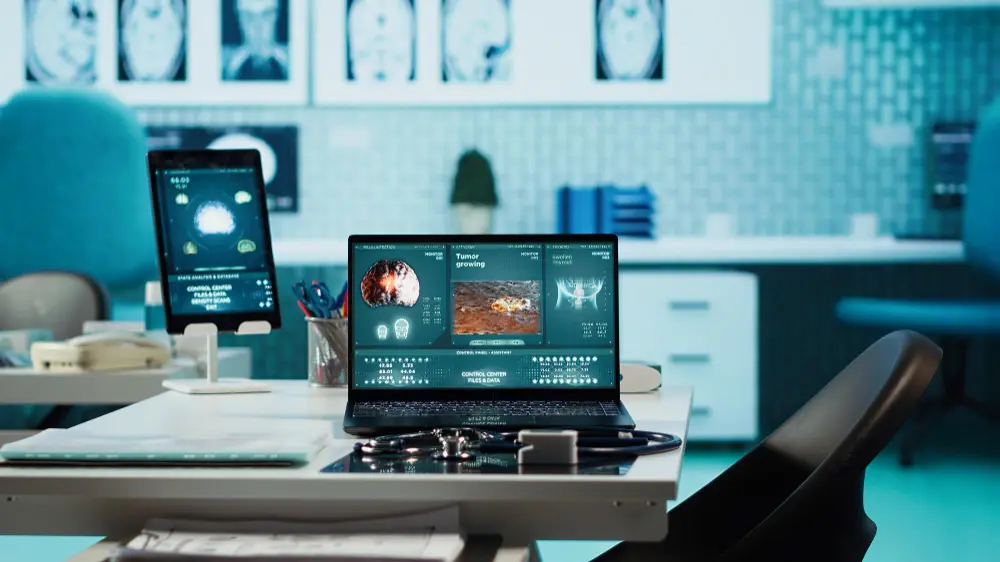
Healthcare IT Has to Support Care, Security and Compliance at the Same Time
- Staff need access to EHR.
- Front desk teams need reliable scheduling and billing systems that won’t go down during check-ins.
- Providers need a secure way to message patients, review results and coordinate across multiple facility locations.
What Managed IT Services for Healthcare Should Cover
The benefits of managed IT services for healthcare go beyond password resets. What an MSP in healthcare does is take responsibility for the full environment, from the systems themselves to the people who use them, the devices that connect to them, the cloud platforms that host data, the security controls that protect everything, and the backups that keep everything running if something fails.
Here’s what a provider should cover.
Help Desk Support for Clinical and Administrative Staff
Healthcare help desk support should support the fast pace of a clinical setting. Providers in between patients don’t have time to wait on hold. Billing teams can’t afford to have support tickets stuck in the queue.
Support must be fast, and the team behind it must be informed about the tools healthcare staff actually use while being available when teams need them most.
Backup, Disaster Recovery and Business Continuity
Patient records and operational data must both survive a hardware failure, natural disaster or ransomware attack.
Managed IT solutions for healthcare should include tested backup systems and a documented recovery plan. This ensures that healthcare backup and disaster recovery isn’t just a theoretical policy but a process the organization can actually execute when needed.
Microsoft 365, Azure and Cloud System Management
Most medical organizations run their daily operations through Azure and Microsoft 365 environments, from internal communication to email, scheduling and shared records.
Managed IT support for healthcare should include active management of these platforms through:
- Proper configuration
- Secure access policies
- Ongoing maintenance
Professional support means that Microsoft 365 for healthcare and Azure for healthcare stay dependable without staff having to troubleshoot problems on their own.
Endpoint, Device and Network Support
Workstations, mobile devices, tablets, and the network that connects them all need consistent oversight. Standard support for medical offices should include:
- Patching
- Device management
- Healthcare endpoint security
Every connected device is a potential entry point. Professional support and management ensure each one is accounted for.
Why Generic IT Support Is Not Enough for Healthcare Providers
Healthcare organizations handle sensitive data:
- Protected health information (PHI)
- Insurance data
- Payment details
- Patient communication
- Medical records
But they also handle the operational systems that keep care moving.
For these reasons, healthcare IT needs stronger security and more careful support than standard office IT.
Patient Data Needs Stronger Protection
Patient records are valuable to attackers because they also include personal and financial information.
Managed IT services for medical practices must treat that data with a high level of protection that matches what’s at stake, including access controls, encryption and monitoring specifically built for PHI.
Downtime Can Disrupt Patient Care and Revenue
Outages at healthcare facilities affect productivity, delay appointments, access to patient history and billing and claims processes.
Managed IT services for healthcare organizations must be built around uptime and quick response times because the cost of downtime in a clinical setting is far-reaching.
Healthcare Teams Often Work Across Many Systems
- An EHR
- A billing platform
- Insurance portals
- Lab and imaging systems
- Patient communication tools
HIPAA-Ready IT Support Without Turning the Page Into Legal Advice
Managed IT services should support the technical side of regulations. HIPAA IT support should include the HIPAA technical safeguards required, such as:
- Access controls
- Audit logging
- Encryption
- Secure transmission of patient data
A HIPAA compliance service can help build and maintain this technical foundation.
While a HIPAA compliance checklist can guide the work, the final responsibility and legal interpretation rest with the organization and its compliance officer or legal counsel.

Cybersecurity for Healthcare Cannot Be Treated as Optional
Medical care providers are frequent targets of cyberattacks. Why? Because they hold:
- Patient records
- Insurance data
- Billing information
This data is more valuable on the open market than most other types of stolen data.
Healthcare cybersecurity must be built into the foundation of managed IT services and not offered as a separate add-on.
Managed cybersecurity for healthcare means threat protection is active every day and not something that’s addressed after an incident.
Protect Email, Identities and Remote Access
Email is a common entry point for attackers who target healthcare organizations.
For this reason, managed IT services for healthcare companies must include email security as well as strong identity controls and secure remote access. These services offer PHI protection, patient data protection and EHR support.
Monitor Endpoints and Detect Threats Early
A healthcare MSP should provide continuous monitoring across devices and systems. That means having healthcare remote access security, ongoing healthcare vulnerability management and detection tools that catch suspicious activity before it escalates.
Prepare for Ransomware, Phishing and Account Takeover
Ransomware protection for healthcare and phishing protection for healthcare both depend on preparation ahead of time.
That includes:
- Staff training
- Layered defenses
- Incident response plans that have actually been tested
Managed IT services for healthcare should include this level of readiness as part of its core service so that attack attempts are caught and contained early on.

EHR, EMR and Healthcare Application Support
At Cyber Husky, we don’t replace EMR or EHR vendors. Healthcare applications stay in the hands of the specialists who build them.
What we do is keep the surrounding environment stable:
- Networks
- Devices
- Integrations
- Infrastructure
When the environment around EHR is well managed, applications perform the way they’re supposed to.
Cloud Services for Healthcare Teams Using Microsoft 365 and Azure
Our background in Microsoft and Azure environments makes cloud services for healthcare a core strength.
Our approach leverages these environments to support secure collaboration between clinical and administrative staff, remote work, automated backups, and infrastructure that’s built with HIPAA requirements in mind.
Managed IT for Clinics, Practices and Healthcare Groups
Fully Outsourced IT for Small and Mid-Sized Practices
Practices that don’t have an internal team benefit from healthcare IT managed services that cover everything:
- Help desk
- Security
- Cloud management
- Compliance support
Fully outsourced solutions deliver the high level of medical practice IT support organizations need without the overhead of hiring an internal team.
Co-Managed IT for Healthcare Teams With Internal Support
Larger organizations with an existing team often need a partner rather than a replacement. An MSP for healthcare in this setup extends internal capacity by taking on specialized security work, providing after-hours coverage or delivering support for specific projects.
Co-managed IT for healthcare lets internal teams keep ownership of strategy while offloading the workload that stretches them thin.
Scalable Support for Multi-Location Healthcare Organizations
Organizations that operate across multiple locations need consistent standards across the board and not a different setup at every site.
IT managed services should scale seamlessly as the operation grows, and clinic IT support needs to stay just as responsive whether there’s one location or ten.
How Cyber Husky Works With Healthcare Organizations
We offer robust managed IT services for the healthcare industry. Here’s what we do.
Review Your Current IT and Security Setup
We start with an honest look at what’s already in place. This step allows us to identify gaps in security, compliance or reliability that need attention.
Clean Up Gaps That Create Risk or Downtime
Once these gaps are identified, we work through them systematically. Our team applies tailored solutions that address weak points in security, outdated systems and unreliable backup processes.
Support, Monitor and Improve Over Time
IT support doesn’t stop once the initial cleanup work is done. Ongoing monitoring, maintenance and planning keep healthcare business continuity strong as the organization’s needs change and grow.
Why Healthcare Teams Work With Cyber Husky
Healthcare organizations rely on us to support their IT needs because we offer:
- A background in Azure and Microsoft that aligns with how most organizations already operate
- Our security practices are built around the specific risks that healthcare data carries
- As a provider of managed IT services for healthcare, we stay focused on keeping clinical operations running, protecting patient data, and giving teams a partner who understands the environment they work in
- We understand the nuances of managed IT services for healthcare industry providers
Our combination of platform expertise and healthcare-specific requirements is what sets a true healthcare MSSP apart from a general IT provider.